Home › Gran Canaria Insurance › Business Insurance
Personal · Independent · English-speaking advice since 1998
Business Insurance in Gran Canaria for British Business Owners
A restaurant in the south, a shop in Las Palmas and a trade business in the north need three different policies. What your business needs depends on who comes through the door, what equipment and stock you hold and how quickly replacements can reach the island. Those are the questions we start with, not the tariff – and we discuss them with you in English.
- Advice in English: policy, terms and claims
- Tax: IGIC rather than mainland VAT
- Interruption without physical damage: check it before you sign
- Local office: Playa del Inglés
Request a business insurance quote
For companies, self-employed professionals and local businesses · We usually reply the same or next working day
We compare cover from these leading insurers



OUR FULL RANGE OF SERVICES ON GRAN CANARIA
Comprehensive coverage from a single source
How it works
From the form to a proper comparison
Complete the form
Tell us your activity, legal structure, location and roughly what equipment and stock you hold. Contracts, accounts and detailed inventories can come later; that is enough to start.
Talk through the business and the values at risk
Michael Dittkrist will call you rather than sending a generic form letter. We start with one practical question: what would need to be replaced after a loss so that you could keep trading?
Compare offers side by side
We compare several insurers and take you through the points where the policies differ, explaining in English what those differences would mean if you had to make a claim.
Your local contact
Business insurance advice in Gran Canaria
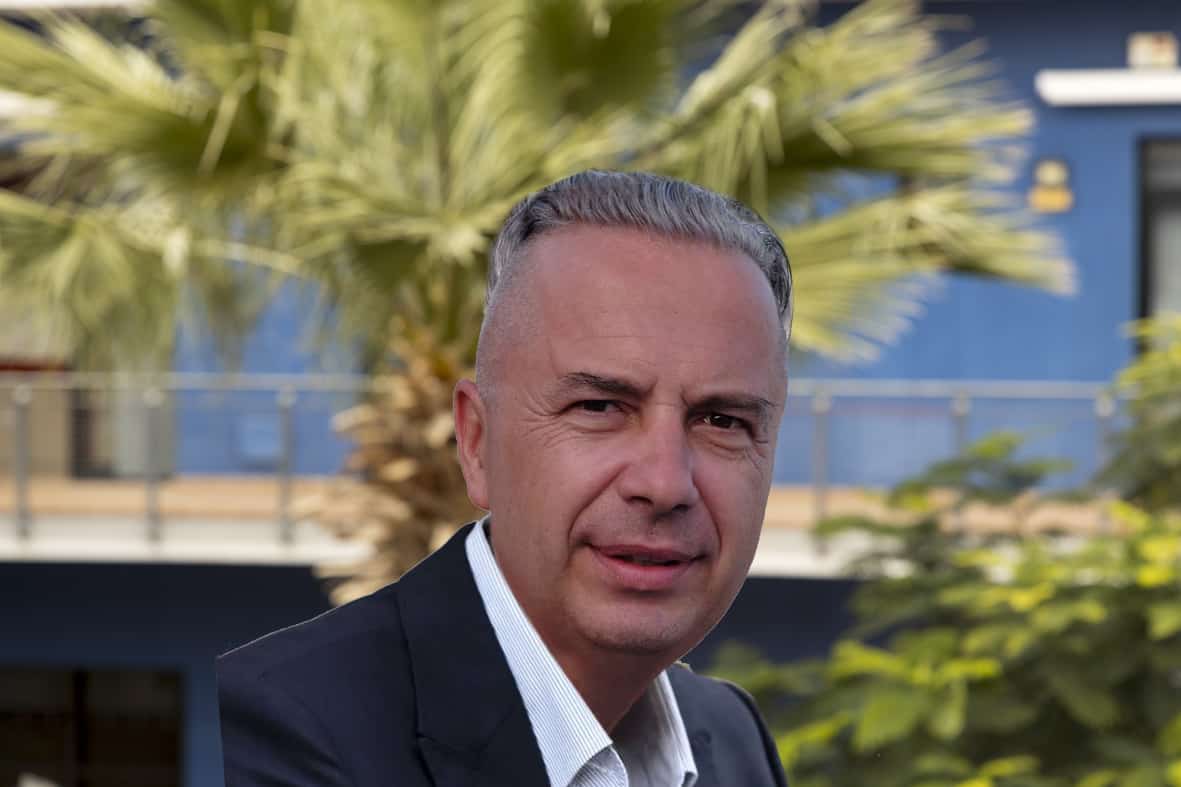
Michael Dittkrist, insurance broker for C1 Broker in Gran Canaria
Michael Dittkrist
Insurance broker for C1 Broker in Gran Canaria. Michael works with businesses from Playa del Inglés to Las Palmas as clients and neighbours. For your business, that means going through what you own, who works for you and which policies are already in place, then explaining in English what the Spanish policy wording says before you sign.
- Telephone: +34 928 988 538
- Mobile: +34 634 10 62 16
- Email: [email protected]
- Office: Av. Tirajana 16 Bj, 35100 Playa del Inglés, Gran Canaria
- Languages: English, German and Spanish
Reviews
Reviews for our Playa del Inglés office
★★★★☆
4.2 out of 5 stars from 46 reviews on the Google Business Profile for our Playa del Inglés office. Reviews are collected and published by Google; we do not select or filter them.
C1 Broker Gran Canaria
Figures as of September 2026, publicly viewable on Google
A business in the south and one in Las Palmas do not need the same cover
Businesses across Gran Canaria serve very different customers depending on location. In the south around Playa del Inglés and Maspalomas, tourism sets the pace. In Las Palmas, administration, the port and local commerce play a larger role. In the north around Arucas, Teror and Moya, many trades travel to the customer. Insurance should therefore start with where your assets are and who comes into contact with them, not simply with the product category. Two examples make the point.
A venue in Playa del Inglés with different guests every week
Insurance is based on replacement cost, and whether tax forms part of that cost depends on your business. If you can recover the tax you pay, it is not ultimately your economic cost and the sum insured can normally be set net of that tax. If you cannot recover it, the tax forms part of the replacement cost and should be reflected in the sum insured. This matters especially for some small sole traders operating under the Canary Islands REPEP regime, where the tax treatment differs from businesses that charge and deduct IGIC in the usual way.
A trade business in Telde that works at customers’ premises
This kind of business is rarely exposed only at its registered address. Work takes place on someone else’s premises, often alongside other trades. Two risks sit close together but are not the same for insurance purposes: damage to your own work and damage to the surrounding property. A policy does not automatically cover both. You also need to consider tools, materials and equipment travelling between jobs or left in a vehicle overnight.
Both businesses could technically buy the same class of insurance and still need very different contracts. That is why every quotation starts with your actual business rather than a standard tariff. For a broader overview of business cover in Spain, see our business insurance in Spain page.
The tax has a different name here, and it affects your sum insured
The Canary Islands do not use mainland VAT in the same way; the relevant indirect tax is IGIC under the Canary Islands economic and tax regime. The standard rate is seven per cent. The rates are set out in Articles 32 to 41 of Decreto Legislativo 1/2025, while the wider regime derives from Ley 20/1991. For day-to-day business this is familiar territory, but for insurance it matters because the correct sum insured can depend on whether that tax is economically recoverable by your business.
Insurance is based on replacement cost. If your business can recover the tax paid, the relevant replacement value may be assessed net of that amount. If the tax is not recoverable, it is part of the cost you would have to bear and should therefore be considered when setting the sum insured. Small sole traders under REPEP are one example where this needs careful checking.
We ask about this when preparing the quotation because the appropriate sum cannot be set properly without the answer. Two businesses with identical equipment can therefore need different sums insured and both can be correct. The amount ultimately payable always depends on the contract; our job is to make sure the policy does not start with an obviously inadequate figure.
When the business stops even though nothing has been physically damaged
On 28 April 2025, a major power outage affected mainland Spain. The Canary Islands remained electrically supplied because their grid is separate from the mainland, but the day still caused disruption locally: telephone and internet services were affected and the Canary Islands government activated the emergency level of its territorial plan. For businesses, the practical problem was obvious even without a physical loss: card payments, connected tills, bookings and online orders could stop working.
From an insurance perspective, that is a difficult scenario because traditional property cover usually requires physical damage before business interruption cover responds. If nothing has burned, been stolen or physically broken, a standard property policy may have no insured trigger. Cover for interruption without physical damage therefore needs to be expressly provided. Some policies refer to failure of public utilities, some require damage at the supplier’s premises, and others do not provide that extension at all.
The island’s separate electricity system should not be mistaken for insurance protection. It changes the infrastructure risk, not the wording of your policy. This is why interruption without physical damage should be discussed before you sign. We explain what the offer in front of you actually covers and where separate cyber or technology-related protection may be relevant.
Six points that can determine the amount paid after a claim
Whether a policy works well in a claim often depends less on the name of the product than on six details that can look minor when the contract is arranged. They matter for a shop, workshop, office or hospitality business alike.
The sum insured
What it would cost to replace your equipment and technology
- Use today’s replacement cost, not the accounting book value
- Fully depreciated equipment can still be essential to the business
- The policy wording determines the basis used to calculate compensation
Fluctuating stock
The stock level on the busiest day of the year
- Insuring the annual average can leave you underinsured at peak season
- Some policies allow a higher sum for specified peak periods
- Whether and how far this applies depends on the policy and should be checked in advance
In the wording
The excess and what it applies to
- Different risks can carry different excesses
- With frequent small losses, the excess can matter more than the premium
- The contract states whether it applies per claim or on another basis
Often overlooked
Property belonging to other people on your premises
- Consignment stock, leased equipment and customers’ property may be on your premises
- Because these items do not belong to you, they are not automatically covered as your own property
- Cover for them needs to be expressly included
Island logistics
How long replacements take to reach Gran Canaria
- Machinery and equipment may need to arrive by sea or air
- Recovery time depends on actual procurement, not the date the insurer agrees the claim
- What is payable during that period depends on the cover purchased
Before the loss
What your records can prove later
- Invoices, inventories and photographs can determine how much you can prove
- Keep records before a loss, not after the file cabinet has burned
- An off-site or cloud copy can be set up quickly and is far easier to recover
The precise extent of each point depends solely on the terms and conditions of the insurer concerned. This overview explains the concepts; it does not create a right to claim.
For a meaningful initial enquiry we only need four things: your business activity as registered, the legal structure, the number of employees and a rough estimate of the equipment and stock on the premises. We can clarify everything else with you afterwards.
For the other insurance areas we handle on the island, see our Gran Canaria insurance overview. Vehicles registered to the business, or regularly used on its behalf, should be considered separately; see our car insurance in Gran Canaria page.
The information on Spanish rules on this page is general information as at September 2026. It refers to Ley 20/1991 and Decreto Legislativo 1/2025 (the Canary Islands economic and tax regime and IGIC) and Ley 50/1980 (Insurance Contract Law, including Articles 3 and 16). It does not replace a review of your individual circumstances or legal advice. Your contract and the insurer’s policy terms are decisive.
Frequently asked questions about business insurance in Gran Canaria
I work from home as self-employed. Is my home insurance enough?
Usually not in full. A private home policy is designed for private residential use. Once you work from the same premises, business equipment, stock, customer documents and liability arising from your professional activity may fall outside the intended cover. Some policies exclude business use completely, while others allow limited use or a fixed amount. Send us your existing policy and a short description of what you do. Sometimes an extension is enough; in other cases a separate business policy is more appropriate.
Our stock levels vary a lot during the year. What value should we insure?
Use the highest realistic stock level rather than the annual average. The peak may fall at Christmas, during a busy tourism period or at another point in your trading cycle. Tell us when stock is highest and roughly what it is worth. We can then compare a permanently higher sum with policies that allow a seasonal increase for specified periods. Which option is more efficient depends on the wording and price.
Tools and materials stay in the company vehicle overnight. What happens if they are stolen?
This is normally a question for the business policy rather than the motor policy, because the vehicle insurance covers the vehicle itself, not automatically the tools or stock inside it. Business policies vary widely: some cover equipment in transit up to a separate limit, some require the vehicle to be locked or garaged, and some exclude items left overnight. We check the wording and show you whether an extension is needed.
We subcontract part of our work. Who is liable if something goes wrong?
You can remain responsible to your customer even when a subcontractor performed the work. Whether you can then recover the loss from the subcontractor is a separate contractual issue. From an insurance perspective, check whether your liability policy includes work you subcontract and whether the subcontractor has adequate cover of their own. Ask for written evidence of their insurance before work starts and send it to us if you want the scope checked.
The policies are in Spanish. What applies if we do not understand the wording?
The issued contract is normally in Spanish and that wording is the authoritative version. Before you sign, we explain in English the sections that matter most: scope of cover, exclusions, excesses and your obligations. Article 3 of Spain’s Insurance Contract Law also deals with clauses that limit the insured person’s rights and the way those clauses must be presented and accepted. We highlight the relevant sections while there is still time to question them.
How quickly must a claim be reported?
Spanish Insurance Contract Law provides a general seven-day period from the time you become aware of the loss, unless the policy gives you a longer period. Do not wait until every invoice or expert report is ready. Tell us early; the initial notification can be made and supporting documents can usually follow later.
Turnover has grown considerably since we arranged the policy. Should the cover grow too?
Often, yes. As turnover grows, stock, equipment, staffing or the nature of the activity may also change while the policy sums remain fixed at the original level. A second location, a new activity or major alterations may also need to be disclosed. We recommend a review before renewal and an earlier review whenever there is a material change.
I am the business. What happens if I cannot work?
This is a separate risk from property and liability cover. Liability protects others, property insurance protects business assets and employee-related cover protects employees. Your own inability to work can still leave rent and other fixed costs running while revenue falls. Separate income-protection or daily-benefit solutions may be available, and Spanish social-security benefits for the self-employed may also be relevant. The suitable approach depends on your age, occupation and health, so it needs an individual review.
The local authority requires proof of insurance for a terrace. What needs to be shown?
The exact requirement should be taken from the permit or municipal decision rather than assumed from a general rule. Often the authority wants evidence of business liability cover and expects the certificate to identify the permitted activity and the area concerned. Send us the document before arranging the policy and we can check what the certificate needs to state.
C1 Broker Gran Canaria – Playa del Inglés office
Protect your business in Gran Canaria with cover that fits
Free advice in English · We usually reply the same or next working day